
Course contents
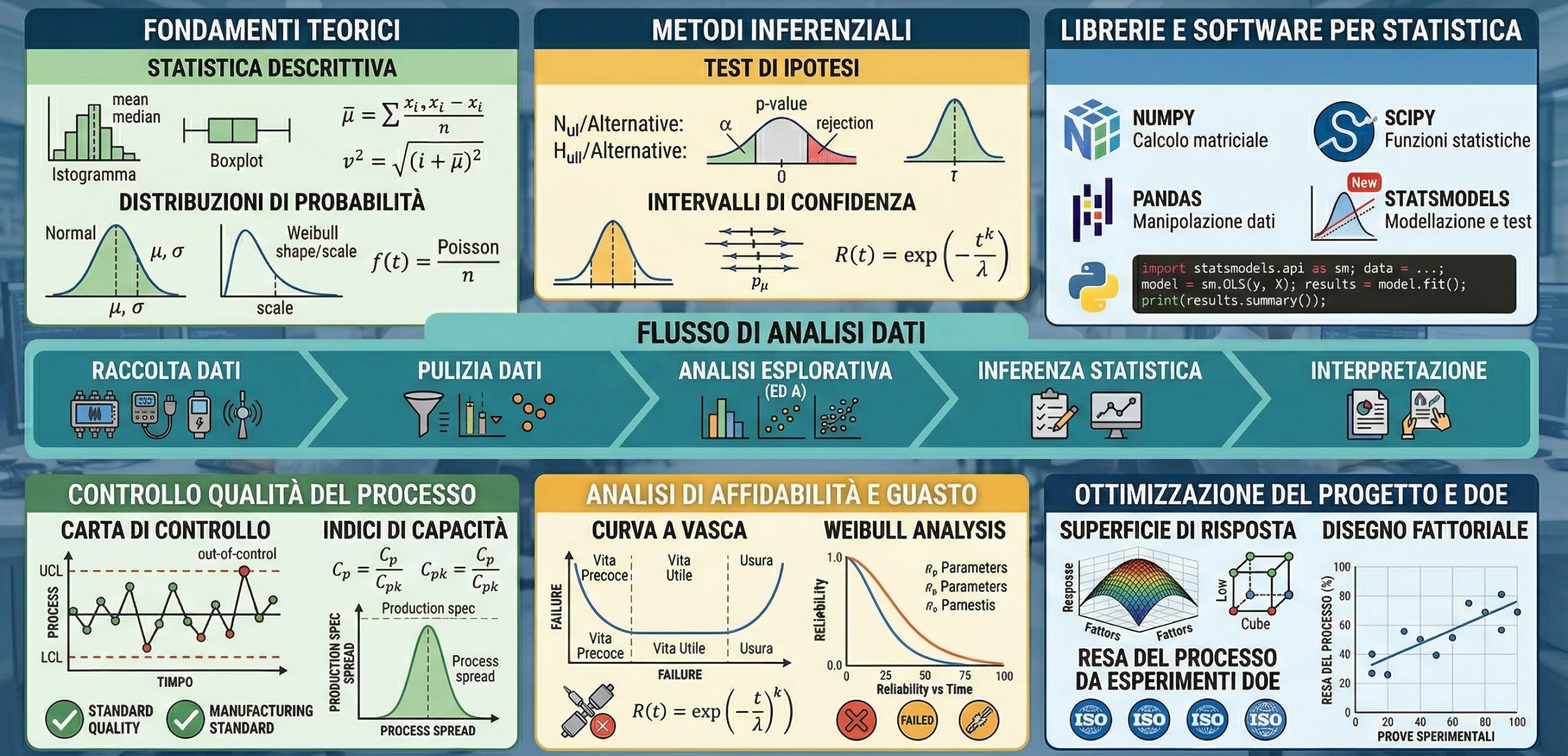
This course provides a robust foundation in statistical methodologies and data-driven modeling tailored for engineering research. The programme bridges traditional inferential statistics with modern computational intelligence, equipping doctoral candidates with the analytical framework required to extract meaningful insights from complex experimental and industrial datasets.
The curriculum is structured to guide students from foundational descriptive and inferential statistics to more advanced analytical techniques. Initial modules cover linear and non-linear regression models, providing the basis for characterizing system behavior. A significant portion of the course is dedicated to Machine Learning, specifically investigating both supervised and unsupervised algorithms for classification, clustering, and predictive modeling. Additionally, the programme explores the Design of Experiments (DOE), teaching students how to optimize experimental setups and minimize resource expenditure while maximizing data quality. Through hands-on activities with specialized software, students will learn to apply these theoretical concepts to real-world scenarios, culminating in the development of a personal statistical project that integrates the methodologies explored during the lectures with their own doctoral research objectives.

Learning goals
By the conclusion of the course, PhD students will have acquired the fundamental statistical concepts necessary to manage diverse data sources, including those generated within their specific research projects. Participants will develop the proficiency to build and solve physics-based and data-driven systems, mastering both classical inferential methods and advanced machine learning algorithms. Furthermore, the course fosters the ability to use professional, user-friendly statistical software to design, execute, and interpret independent research projects.
Suggested readings
Materials (slides, datasets, etc.) of the course will be provided by the course leaders.
Notes
The course is structured into 2 online (February) and a Summer School of 4 days (June). The Summer School will take place in Villa San Giuseppe, Monguelfo, Bolzano province. During the course an introduction to the use of the following statistical software will be presented:
- R and BlueSky, both open-source software.
- MINITAB, licensed to University of Padova.