
Course contents
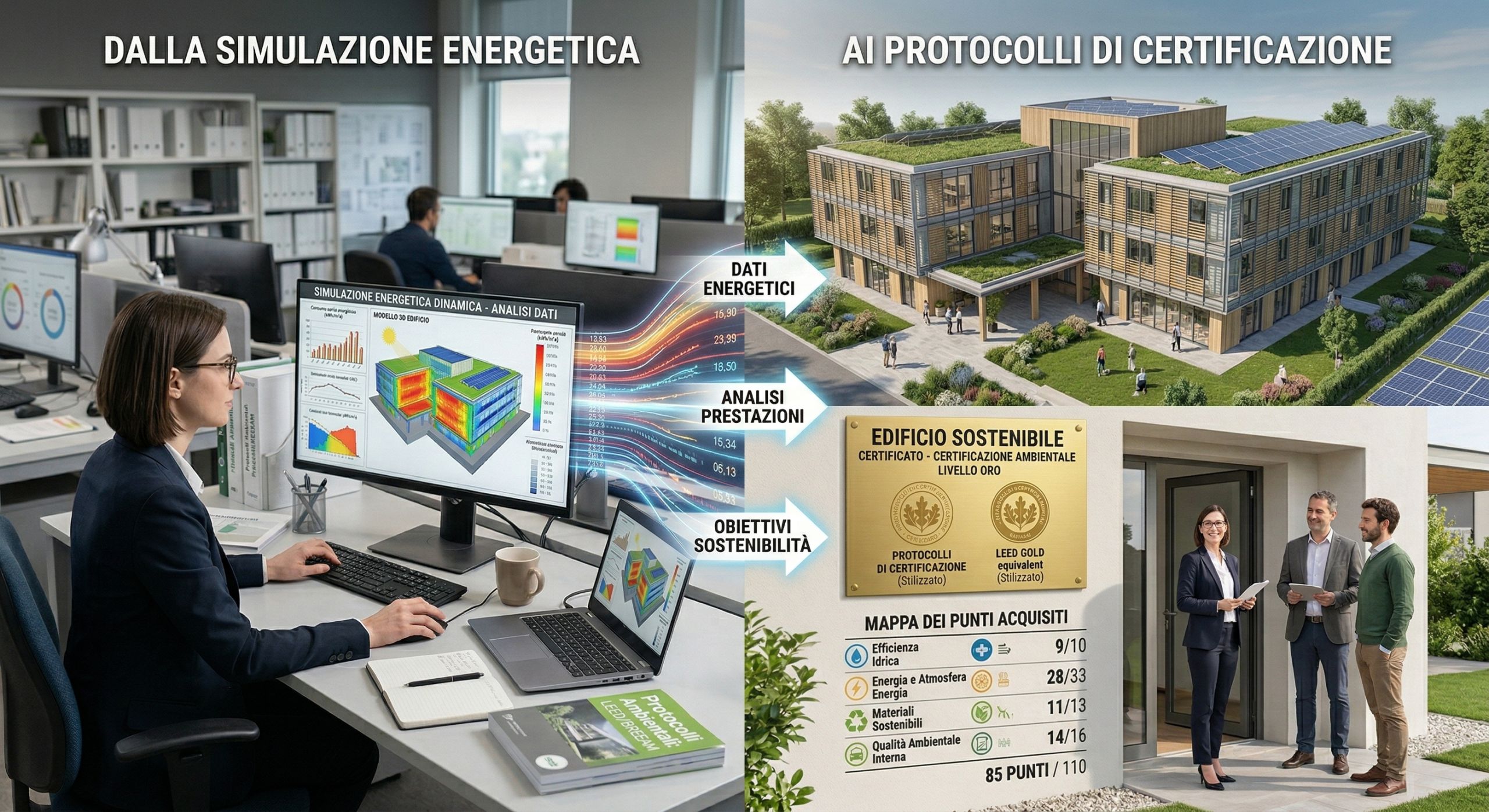
This course focuses on the thermal and energy performance of the built environment, addressing the urgent need for decarbonization in the building sector. The programme investigates the energy dynamics of building envelopes and plant systems, providing doctoral candidates with the methodologies to conduct detailed energy audits, simulations, and environmental assessments.
The curriculum begins with an introduction to the thermal and energy properties of building envelopes, establishing the boundary conditions necessary for rigorous design and energy analysis. Detailed modules cover the performance of building components and technical devices, exploring the energy dynamics of the entire structure. A significant portion of the course is dedicated to regulatory frameworks and sustainability standards, specifically examining the differences between mandatory energy certification and voluntary environmental protocols. Additionally, the programme emphasizes the practical use of advanced simulation tools for the energy modeling of buildings and plants. Students will learn to implement dynamic simulations to perform high-fidelity energy audits, identifying strategies for reducing energy consumption and carbon emissions. The course also addresses the broader environmental impacts of the building field, analyzing how the application of global protocols influences ecology, transport, and pollution mitigation to ensure holistic sustainability.

Learning goals
By the end of the course, students will be able to analyze complex energy challenges within the building sector, understanding the global impact of construction on the CO2 footprint. Participants will master the procedures for energy certification in Italy and gain a comprehensive knowledge of international sustainability protocols such as GBC, Itaca, and BREEAM. Furthermore, the course sviluppa proficiency in using dynamic simulation tools to evaluate energy-saving potential and to assess the benefits of environmental protocols across various domains, including indoor well-being, material selection, and waste management.
Suggested readings
- Ashrae Standard 90.1-2022—Energy Standard for Sites and Buildings Except Low-Rise Residential Buildings
- Fatma S. Hafez et al. (2023) Energy Efficiency in Sustainable Buildings: A Systematic Review with Taxonomy, Challenges, Motivations, Methodological Aspects, Recommendations, and Pathways for Future Research. Energy Strategy Reviews Volume 45, January 2023, 101013
- Zhihang Zheng et al. (2024) Review of the building energy performance gap from simulation and building lifecycle perspectives: Magnitude, causes and solutions. Developments in the Built Environment Volume 17, March 2024, 100345.