35 events found.
Event
Events
Calendar of Events
|
Monday
|
Tuesday
|
Wednesday
|
Thursday
|
Friday
|
Saturday
|
Sunday
|
|---|---|---|---|---|---|---|
|
0 events,
|
1 event, |
1 event, |
0 events,
|
1 event,
Course unit contents This course provides fundamental knowledge, theory, and practical insights for researchers addressing the complex challenges associated with particulate materials and powder flowability. The programme bridges the gap between microscopic particle properties and macroscopic flow behavior, essential for optimizing industrial processes involving granular media. The course is organized into two core modules. The first section examines the key physical properties and characterization methods for particulate materials, including particle morphology, size distribution, apparent density, and porosity. This includes a detailed analysis of solid-solid contact interactions and the definition of cohesion. The second section focuses on the mechanics of solids applied […]
$30
|
1 event, |
0 events,
|
|
0 events,
|
0 events,
|
0 events,
|
0 events,
|
0 events,
|
0 events,
|
0 events,
|
|
0 events,
|
0 events,
|
1 event,
-
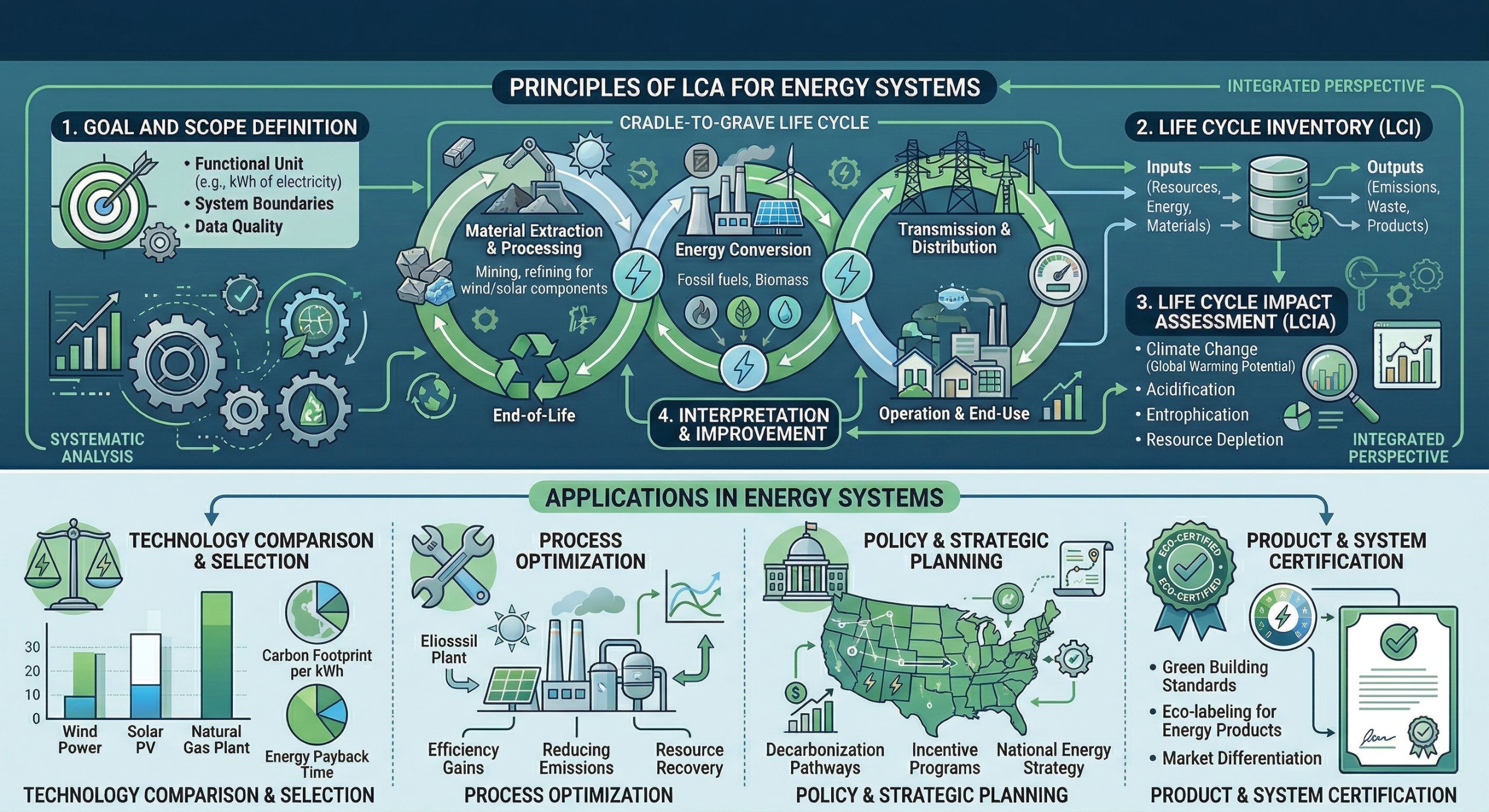
Course contents This course provides an advanced exploration of Life Cycle Assessment (LCA) methodologies, following the international standards ISO 14040 and 14044. The programme focuses on the environmental evaluation of energy systems, providing doctoral candidates with the analytical tools to monitor and improve the sustainability performance of products and services throughout their entire life cycle. The curriculum covers the four fundamental stages of LCA: goal and scope definition, inventory analysis, impact assessment, and interpretation. Students will examine the most widely used models and updated databases for inventory analysis, specifically focusing on the proper evaluation of reference systems for electricity and heat […] |
0 events,
|
0 events,
|
0 events,
|
0 events,
|
1 event,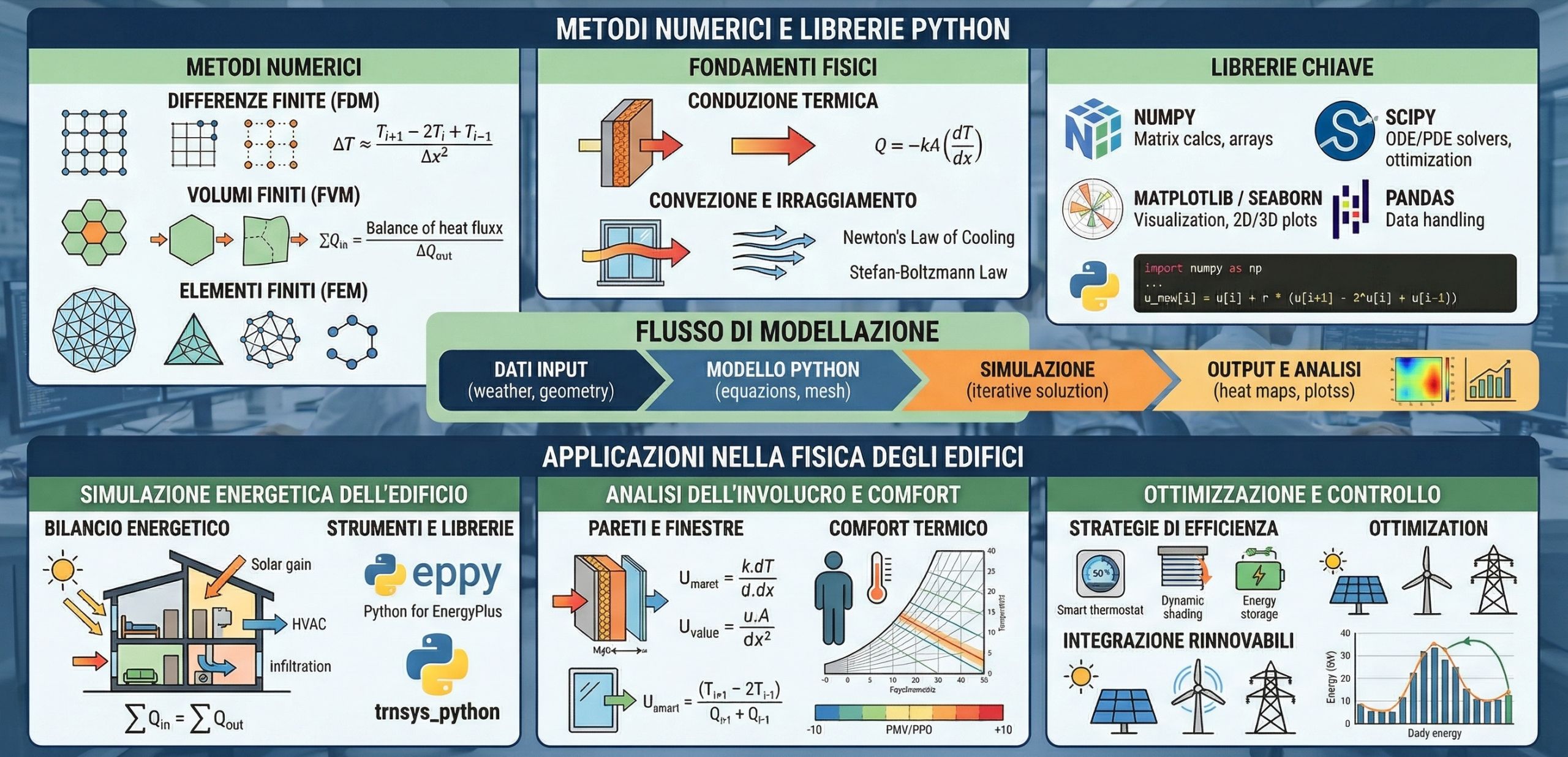
Course unit contents Despite the rapid rise of data-driven methodologies, physics-based modeling remains a crucial, flexible, and adaptable tool for engineering research. This course provides a practical introduction to transient heat transfer and building physics modeling, leveraging the Python programming language to bridge theoretical foundations with computational implementation. The programme begins with a brief introduction to Python, covering data structures, control loops, essential libraries, and data visualization. Students will then progress to developing their first models, specifically investigating 1D heat transfer through solid elements and the dynamics of radiant panels. The course extends into more complex architectural modeling, including the development […] |
0 events,
|
0 events,
|
0 events,
|
0 events,
|
0 events,
|
|
|
0 events,
|
0 events,
|
0 events,
|
0 events,
|
0 events,
|
0 events,
|
0 events,
|